
call today for your free evaluation
call today for your free evaluation
Posted on July 9, 2026 written by Jane Paulson
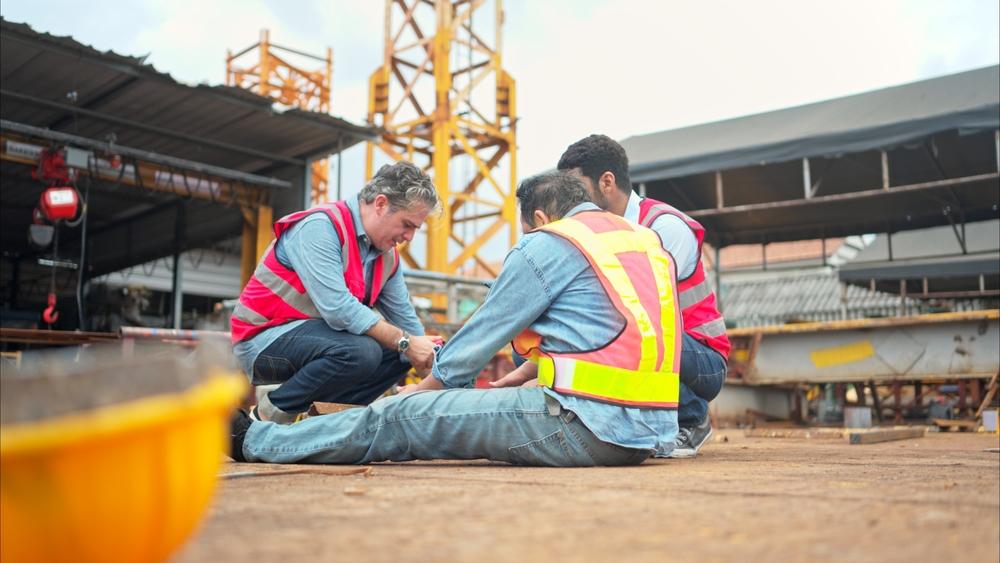
Few industries ask more of their workers than construction. In Portland, Oregon, that reality plays out daily on rooftops, scaffolding, and elevated platforms where the difference between a close call and a catastrophic outcome can come down to a single missing guardrail or an uninspected harness. When something goes wrong at height, the consequences rarely leave room for recovery. Families are left searching for answers, and the legal path forward is rarely as simple as filing a workers’ compensation claim. What is the #1 cause of death in construction? Falls from height, and no other hazard comes close. Falls account for approximately 35% to 40% of all construction fatalities in the industry, a figure that has remained stubbornly consistent across decades of federal data.
If you have lost someone or suffered a life-altering injury on a job site, a Portland Construction Accident Lawyer at Paulson Coletti Trial Attorneys can help you understand every legal option available to you.
Contact Our Portland Construction Accident Lawyer
According to the Bureau of Labor Statistics Census of Fatal Occupational Injuries, falls from elevation account for more construction worker deaths each year than any other single cause. Rooftops, scaffolding, ladders, open floor openings, and elevated platforms are among the most common locations where these fatal incidents occur.
Falls are also among the most preventable construction fatalities on record. Federal and Oregon safety standards require employers to provide fall protection systems, including guardrails, personal fall arrest systems, and safety nets, for workers operating at heights above certain levels. When those systems are absent, improperly installed, or poorly maintained, a routine shift can end in a death that no regulatory standard should have allowed.
OSHA identifies four hazard categories responsible for the majority of construction worker fatalities, collectively known as the Fatal Four: falls, struck-by incidents, electrocution, and caught-in or caught-between hazards. Of these, falls account for the largest share by a significant margin. What is the #1 cause of death in construction? Every credible federal dataset points to the same answer.
Struck-by incidents rank second, followed by electrocution and caught-in or caught-between hazards. Together, eliminating the Fatal Four would prevent roughly 60% of construction worker deaths each year. Falls outpace the other three because the exposure is nearly universal. Framing crews, roofers, concrete workers, ironworkers, and painters all operate at heights with lethal fall hazards. When fall protection requirements are ignored or workers are not properly trained, the risk compounds shift after shift.
Fatal construction falls rarely result from a single, isolated failure. More often, they involve a combination of conditions that individually might seem manageable but together create an unreasonable level of danger. Identifying those conditions is central to any legal evaluation of what caused the accident and who bears responsibility.
Conditions that frequently contribute to fatal falls include:
Any of these conditions, alone or in combination, can convert a fall that should have been stopped into a fatal event. Oregon employers carry a legal obligation to identify and correct these hazards before workers are ever exposed to them.
Please read: Most Common Injury Caused by Working with Machines Unsafely
Oregon workers’ compensation provides benefits to injured workers and the families of those killed on the job, but it is not always the only source of recovery. Workers’ compensation operates as an exclusive remedy in most employer-employee relationships under Oregon Revised Statutes 656.154, which limits direct lawsuits against an employer when workers’ comp coverage applies. That limitation, however, does not extend to third parties whose negligence contributed to the accident.
When a fatal fall involves a general contractor who failed to enforce site safety, a property owner who allowed dangerous conditions to persist, or an equipment manufacturer whose product failed, those parties may be pursued through a separate civil claim. These third-party claims fall entirely outside the workers’ compensation system and can result in compensation for losses that workers’ comp does not cover, including pain and suffering, full lost earning capacity, and the broader impact on a surviving family.
Multiple parties may be legally responsible for a fatal construction fall, depending on how the site was managed and what caused the fall. General contractors are responsible for maintaining overall site safety and can be held liable when subcontractor workers are injured due to site-wide hazards. Property owners who retain control over site conditions may also face liability when those conditions contribute to a fatal accident.
Equipment manufacturers and distributors can be pursued under product liability theories when a defective ladder, harness, scaffold component, or safety device fails during normal use. Identifying every potentially liable party is one of the first priorities in evaluating a serious construction accident case.
Third-party liability claims in Oregon operate under a modified comparative negligence standard, meaning fault can be allocated among multiple parties. A surviving family or seriously injured worker can still recover damages as long as their share of fault does not exceed 50%. The total recovery is reduced in proportion to the assigned percentage of fault, making thorough investigation and early evidence preservation critical.
Oregon OSHA regulations, known as OR-OSHA, establish the safety standards employers must follow on job sites throughout the state. Violations of those standards carry weight in civil cases and can support negligence findings. Documentation of prior safety citations, failed inspections, or unresolved hazard complaints can significantly strengthen a third-party liability claim.
The strength of a construction accident claim frequently depends on the quality of evidence gathered in the immediate aftermath of the incident. Physical conditions at a job site change quickly, equipment is removed, and witnesses become harder to locate over time. Acting early to preserve evidence is often the difference between a strong case and one that is difficult to pursue.
Evidence that commonly plays a decisive role includes:
A fatal or catastrophic fall raises questions that go well beyond what workers’ compensation is designed to answer. What is the #1 cause of death in construction? Falls, but identifying the cause is only the beginning. The legal evaluation that follows examines site conditions, employer conduct, third-party involvement, and applicable Oregon law to determine where accountability truly lies and who failed to prevent a preventable death.
Each thread of that investigation, from site control to equipment records to OR-OSHA findings, can lead to a source of liability that exists entirely outside the workers’ compensation system.
Losing a family member or suffering a life-altering injury on a construction site raises questions that workers’ compensation alone cannot resolve. At Paulson Coletti Trial Attorneys, we examine every avenue of accountability after a serious construction fall.
Call us at (503) 226-6361 to discuss your situation and learn about the options available to you.

This page has been written, edited, and fact-checked by our team of legal writers in accordance with our editorial guidelines. It has been approved by partners Jane Paulson and John Coletti—respected trial attorneys with decades of experience representing personal injury victims.
Key Takeaways Workers’ compensation does not cover all losses; third-party claims can recover pain, suffering, and full damages. Subcontractors, property owners, and equipment manufacturers...
Key Takeaways Construction accident liability in Oregon can fall on multiple parties, not just the direct employer. Construction companies must maintain safe job sites...
Key Takeaways Defective equipment is any tool, machine, or vehicle component that fails to operate safely or lacks required safety features. Manufacturer defects, poor...

 (503) 226-6361