
call today for your free evaluation
call today for your free evaluation
Posted on June 9, 2026 written by Jane Paulson
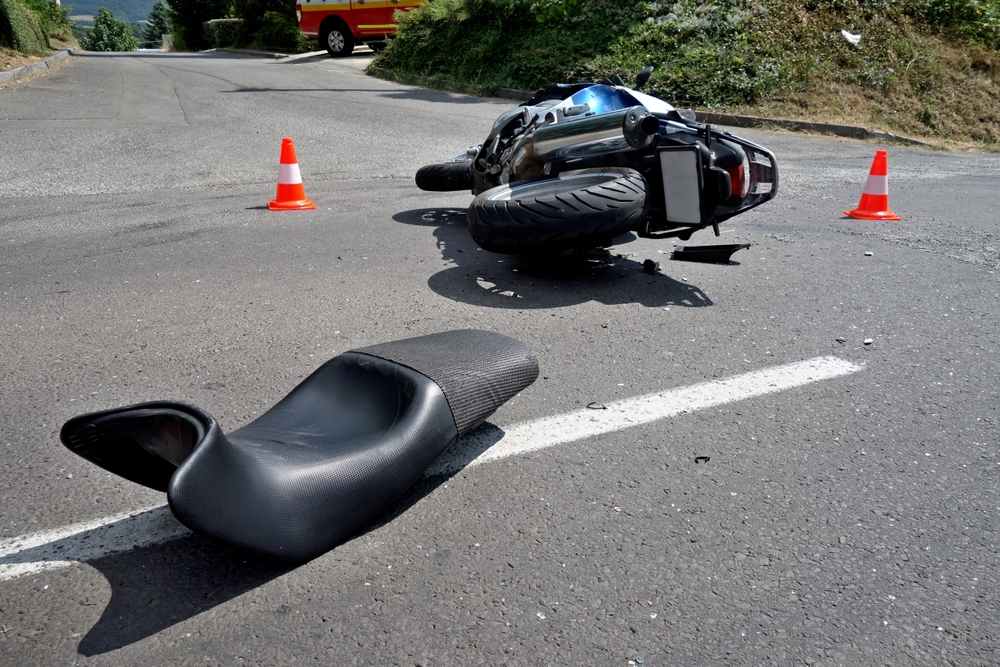
Motorcyclists have no structural protection between them and the road. When a crash happens, the rider absorbs the full force of it, and the most common injuries in motorcycle accidents reflect that directly. At Paulson Coletti Trial Attorneys, a Portland motorcycle accident lawyer from our team can help you understand what those injuries mean for your recovery and your legal options in Oregon.
Road rash, broken bones, traumatic brain injuries, and lower extremity injuries are the most frequent outcomes riders sustain. Leg and foot injuries alone account for roughly 30% of non-fatal accidents. These injuries typically result from direct impact, sliding across pavement, or being pinned beneath the bike. Protective gear can reduce severity, but it cannot eliminate risk entirely.
Contact Our Portland Motorcycle Accident Lawyer
Motorcycle crashes produce a consistent injury pattern because riders have no structural protection. Unlike car occupants, a motorcyclist who is struck or loses control has nothing absorbing the impact except their own body and gear. Road rash appears in nearly every crash involving pavement contact, ranging from surface abrasions to deep wounds requiring skin grafts.
Bone fractures, particularly to the wrists, arms, and collarbones, follow as riders instinctively brace. Lower extremity injuries, including fractures of the femur, tibia, and ankle, are also common, with the legs and feet directly in the path of most collision forces.
Of all the most common injuries in motorcycle accidents, head and brain injuries carry the greatest potential for permanent harm. A traumatic brain injury, commonly referred to as a TBI, can result from a direct impact with another vehicle, the road surface, or a fixed object. According to the Mayo Clinic, TBI symptoms range from brief disorientation and headaches to unconsciousness, memory loss, and lasting cognitive impairment.
Even helmeted riders can sustain a TBI when collision forces exceed what a helmet is designed to absorb. Unhelmeted riders face dramatically higher risk, and Oregon law requires helmet use precisely because the evidence on brain injury prevention is clear.
Beyond the head, crash injuries follow a predictable pattern tied to how a rider falls and what they strike. The lower extremities, including the legs, knees, and feet, are injured in approximately 30% of non-fatal motorcycle accidents. The upper extremities absorb impact when a rider tries to break a fall.
The chest and abdomen sustain damage in broadside collisions or when a rider is thrown over the handlebars. The spine is vulnerable in high-speed crashes or rollovers, with cervical and lumbar injuries capable of causing permanent paralysis.
Road rash is among the most misunderstood injuries in a crash because its severity is easy to underestimate at the scene. Mild cases involve surface abrasions, but severe road rash strips away multiple layers of skin and creates a significant infection risk without prompt care.
Fractures are equally varied: a broken clavicle may heal in weeks, while a shattered femur or complex ankle fracture can require surgery and months of rehabilitation. Lower body injuries are particularly consequential because they often limit a person’s ability to work or manage daily tasks long after the initial wound has healed.
The severity of injuries in motorcycle crashes comes down to physics and the absence of passive protection. A car transfers collision energy into crumple zones, airbags, and the vehicle frame. A motorcycle transfers that same energy into the rider. Speed amplifies every consequence, and at higher velocities, the forces involved grow exponentially.
Portland’s road conditions contribute as well, with wet pavement, highway on-ramps, and dense urban intersections creating frequent hazard exposure. Driver inattention remains the most common external factor, particularly left-turn collisions, where a vehicle crosses a motorcycle’s path without yielding.
Contact Our Portland Motorcycle Accident Lawyer
Many riders who survive a serious crash face consequences that extend years beyond the accident. Chronic pain following fractures or spinal injuries can become a permanent feature of daily life. TBI survivors may experience cognitive difficulties, emotional changes, and sensitivity to light or sound, which can affect their ability to work and maintain relationships.
Amputations from severe lower extremity crush injuries require prosthetic care, rehabilitation, and ongoing psychological support. Lost earning capacity, continuing medical expenses, and reduced quality of life are all recognized categories of recoverable harm in Oregon personal injury claims.
The nature and severity of a rider’s injuries shape every aspect of a motorcycle accident claim. Medical documentation, treatment timelines, and expert opinions connect the crash to the harm and establish its full financial scope. Oregon follows a modified comparative fault system, and under Oregon Revised Statutes Chapter 31, a claimant found more than 50% at fault cannot recover damages.
That standard makes early investigation and evidence preservation critical. Insurers routinely dispute injury severity or attribute pre-existing conditions to minimize payouts, and thorough medical records are often the difference between a fair recovery and an inadequate one.
Important information about Motorcycle Accident Statistics in Portland: What the Data Shows
Recovering from a serious crash while navigating an insurance dispute is an overwhelming combination. At Paulson Coletti Trial Attorneys, we help injured riders understand the full value of their most common injuries in motorcycle accident claims and pursue accountability from the parties responsible.
Our team has handled serious injury cases across Portland and throughout Oregon, and we approach every case prepared to go to trial if that is what it takes. Call us at (503) 226-6361 to speak with a Portland motorcycle accident lawyer and discuss your options in a free consultation.

This page has been written, edited, and fact-checked by our team of legal writers in accordance with our editorial guidelines. It has been approved by partners Jane Paulson and John Coletti—respected trial attorneys with decades of experience representing personal injury victims.
Key Takeaways Motorcycle insurance covers your medical bills only if you carry optional coverages like MedPay or PIP. Standard liability insurance pays the other...
Key Takeaways Strong evidence helps show how the motorcycle crash happened and who is responsible. Photos, witness details, reports, and medical records should be...
Key Takeaways Traumatic brain injury is the leading cause of death in motorcycle accidents, making helmet use critical. Motorcyclists lack the structural protection of...

 (503) 226-6361