

Record verdict
$13,921,922

The #1 jury verdict in the state of Oregon in 2016 — TopVerdict.com
A pedestrian struck by a garbage truck, who suffered a leg amputation. Busch v. McInnis Waste Systems.
Serving all of Oregon & Washington
The injury law firm other lawyers trust — attorneys across the Northwest refer their toughest cases to us.







Start here
Free, confidential, no obligation.
(503) 226-6361
What to say, what to sign, and what a recorded statement can do to your claim later.
Read before you answer
Oregon and Washington deadlines differ, and claims against public bodies are far shorter. Check your date.
Check the deadline
Tell us what happened. We tell you whether it is worth a closer look, and why.
Start your free evaluation
Nothing up front. We are paid a percentage only if we recover money for you, and we fund the case ourselves.
How our fees work
How a case moves from first conversation to resolution — the timeline, what we handle, your role, and whether you’ll ever see a courtroom.
See how a case works
Or go straight to your kind of case
About Paulson Coletti
Our team of lawyers is driven to pursue justice for the injured and ensure responsible parties are held accountable. Whether your case settles or goes to trial, you can trust our Oregon and Washington personal injury attorneys to be the legal advocates you need so your voice can be heard.
We are a highly selective Oregon and Washington personal injury law firm representing people harmed by negligence. We pursue full compensation for our clients’ economic and non-economic damages, whether through a negotiated settlement or in court.
We are selective about the number of cases we take on, enabling us to provide personal, undivided attention to each client.
We are skilled negotiators and experienced trial attorneys, and we never hesitate to take a case to trial to seek full compensation.
We provide counsel at no risk to you. Your initial consultation is free and we operate on a contingency fee basis – you do not pay any attorney fees unless we win your case.
Once we accept a case, we advance costs associated with your case and never charge an attorney fee unless we are successful in handling your case. Our attorneys have over 50 years of combined experience in court with an extensive history of high value settlements and verdicts.
 Meet Paulson ColettiWatch
“People come to us at the worst moment of their lives. Our job is to carry the fight so they can put their attention where it belongs — on getting better.”
No fee unless we win.
Free Case EvaluationHundreds of millions recovered for our clients
Record verdict
$13,921,922
The #1 jury verdict in the state of Oregon in 2016 — TopVerdict.com
A pedestrian struck by a garbage truck, who suffered a leg amputation. Busch v. McInnis Waste Systems.
Burns & wrongful death
$58 Million
The firm’s largest recovery to date, for a client catastrophically burned.
Settlement
Negligence
$49 Million
Verdict against PacifiCorp for clients whose homes and property were destroyed by wildfire.
Jury verdict
Truck accident
$48 Million
For a client severely injured in a collision with a commercial truck.
Settlement
Wrongful death
$20.36 Million
For the family of a client killed by another party’s negligence.
Settlement
Results depend on the specific facts of each case. Prior results do not guarantee a similar outcome.
Free case evaluation. No fee unless we win.
What clients say
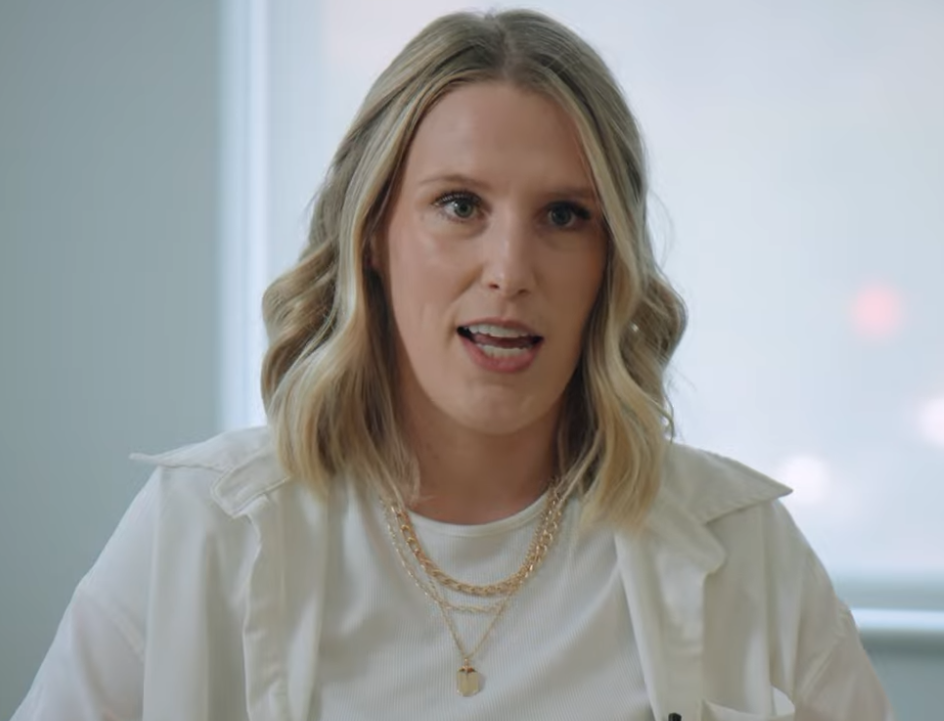
Watch
★★★★★
“Jane Paulson is a champion for her clients! She stood up for me in a way that not only produced excellent results, but also helped me to move on with my life. Her honest and forthright demeanor made it easy to trust her expertise and guidance.”
★★★★★
“John and Lisa were extremely helpful with my family as we navigated damages sustained in a tragic car accident. I can’t imagine working our way through the tragedy without them by our side. I would highly recommend Paulson and Coletti!”
Your legal team
John Coletti and Jane Paulson of Paulson Coletti Trial Attorneys were ranked #1 and #2 on the 2026 Oregon Super Lawyers Top 10 list.
Both partners at Paulson Coletti Trial Attorneys have been named to the Oregon Super Lawyers Top 10 list every year from 2018 through 2026.

Partner
Five-time Best Lawyers “Lawyer of the Year” — medical malpractice and personal injury.

“A hospital will tell you what happened in language designed not to explain it. My job is to find out what actually happened, and then prove it.”
Lawyer of the Year for medical malpractice in Portland, and lead counsel on a Top 10 medical malpractice settlement in the United States.

Partner
Inner Circle of Advocates — invitation-only, capped at 100 plaintiff trial lawyers nationwide.

“The other side counts on you running out of time, money, or patience. We make sure none of those things decide your case.”
Lawyer of the Year for personal injury litigation, and trial counsel on the #1 jury verdict in Oregon and a Top 50 truck accident verdict in the United States.

01
Fifty years of combined experience in Oregon and Washington courtrooms means we know the judges, the defense firms and the insurers sitting across from you.
02
Top recoveries at the state and national level, including the #1 jury verdict in Oregon. That credibility changes what your case is worth.
03
Our clients tell us the same thing: they were kept informed, their questions were answered, and they always knew where their case stood.
04
We keep our caseload small on purpose, so the attorney who takes your case is the one who prepares and tries it.
Our areas of expertise
Top 10 med mal settlements in the U.S. — TopVerdict 2018
Despite the aura around doctors and hospitals, they make mistakes — and proving one takes records, experts and years of preparation. We have extensive experience handling these challenging cases.


Top 50 truck verdicts in the U.S. — TopVerdict 2023
Trucking companies send investigators to the scene within hours, and their insurers are prepared for a fight. We have tried these cases, including the #1 jury verdict in Oregon.

A single site can involve owners, general contractors and subcontractors, each pointing at the others. We identify who is actually responsible and hold them to it.

Insurers move quickly to limit what they pay, often before the full extent of an injury is known. We build the record first, then negotiate from strength.

Top 20 U.S. wrongful death settlements 2018
Oregon law limits who may bring a claim and how damages are counted, and the deadlines are unforgiving. We handle these cases with care for what the family is carrying.

Best Lawyers — Lawyer of the Year, product liability litigation
Defective machinery, vehicles and consumer products, including cases that turn on how a product was designed rather than how it was used.


Harm during labor and delivery is often preventable, but the medical record rarely says so plainly. We work with specialists to establish what should have happened.

The true cost of a brain injury is measured in decades of care, not months of treatment. We prove the future, not just the diagnosis.

Common questions
If your question is not here, call us. The consultation is free.
Motor vehicle accidents
Although car accidents are common, they can often lead to severe wounds. Even minor fender-benders may lead to nagging injuries such as whiplash, which can take months and even years to fully heal. If you have been seriously harmed in a car, truck, motorcycle, or pedestrian accident, we are here to help you negotiate with insurance companies for the maximum possible compensation. If insurance companies are not cooperative, we can file a claim against the at-fault party for the damages you deserve.
Medical negligence and malpractice
Doctors, nurses, and other medical professionals must uphold a standard of care to their patients to ensure their health and well-being. A failure to do so can result in significant injury and grounds for filing a medical malpractice claim or a medical negligence claim. Whether it’s a surgical error, anesthesia error, or negligence during childbirth leading to a birth injury, we can help fully investigate the circumstances surrounding your claim and pursue any responsible parties for the full damages.
Trucking accidents
When large commercial trucks strike smaller passenger vehicles, they can cause significant, devastating injury to occupants. Our Portland personal injury lawyers take on trucking corporations, insurers, and negligent drivers to ensure our clients are heard, supported, and fully compensated. We don’t shy away from powerful opponents because every person hurt on Oregon’s roads deserves justice and peace of mind.
Construction accidents
If you are hurt at your place of work, workers’ compensation insurance should cover the cost of your wounds. However, it is important to note that all insurance claims have a maximum limit imposed by state law. Often, this maximum is not enough to fairly compensate you – especially in cases of serious injury. We can help you explore your options for compensation after a workplace accident and determine the best course of action for your needs.
Due to the multiple circumstances and factors in a personal injury case, the exact cost of an attorney can be incredibly difficult to determine. For example, a personal injury lawyer who takes a case to trial will be significantly more costly than one who manages to obtain a settlement.
At Paulson Coletti Trial Attorneys PC, we understand that legal representation is often a costly expense for those who have just suffered an accident. After all, even minor accidents can result in considerable financial hardship for many families. This is why we offer our legal services on a contingency fee basis.
Your initial consultation is free, and there are no upfront costs if we decide to represent you. Additionally, all legal expenses throughout the case are advanced, and you only pay them if we secure a favorable settlement or verdict on your behalf. If we win, we take our fees as a percentage of your recovery – never out of your pocket.
This strategy allows any injured victims to secure exceptional legal representation without having to worry about whether they can afford it. Additionally, it empowers us to provide the best possible representation, in order to secure the maximum possible compensation for your needs.
Oregon imposes a strict time limit to file a personal injury claim – otherwise known as the statute of limitations. If you are unable to file a lawsuit within this time limit, your claim will likely be rejected. The statute of limitations for personal injury claims in Oregon is 2 years from the date of the injury or accident. Minors can sometimes have up to 5 years to bring a claim depending on the circumstances and the defendant. It is always safest to use the 2-year deadline and to consult a lawyer as soon as possible. However, some types of cases may also have what is known as a “discovery rule”, a time limit that starts from the date the injury was first discovered. This is commonly applicable in medical malpractice cases, where injuries or illnesses may not surface until much later. It is best to consult a lawyer first, however, to determine which types of cases may be eligible under the discovery rule.
Although it is difficult to determine exactly how much you may be able to recover in your case, there are general damages you may secure. These are typically separated into two categories: economic and non-economic damages.
Economic damages
Economic damages are those that can be easily quantified due to bills, receipts, and other easily retrievable records. This includes:
Medical bills, such as ambulance care and emergency room costs
Continuing medical bills, such as cost of hospital stay, rehabilitation, and medication
Lost wages due to time missed from work
Lost earning capacity, any lost theoretical income due to your resultant injuries
Any property damaged in the accident
Funeral expenses
Non-economic damages
Non-economic damages are those that do not necessarily have a monetary value attached to them. This includes:
Pain and suffering
Loss of enjoyment
Loss of consortium
In cases of egregious negligence or accidents where the party shows no remorse, punitive damages may also be awarded to the injured party. As the name suggests, this is done as a form of punishment, in the hopes that it prevents the other party from ever committing such acts again.
Like most other states, Oregon is a fault-based state. Generally, in fault states, the party primarily responsible for an accident is financially accountable for the resulting damages. However, fault and negligence laws determine whether an injured person can recover compensation and how damages are allocated when multiple parties share responsibility. These laws vary from state to state.
Oregon follows a comparative negligence system. Under Oregon law, an injured person may recover compensation as long as they are not found to be more at fault than the other responsible party or parties combined. Any compensation awarded will be reduced by the injured person’s percentage of fault. For example, if someone is found to be 20% responsible for an accident, their recovery would be reduced by 20%.
At Paulson Coletti Trial Attorneys PC, our lawyers provide invaluable help and support during difficult times. Our services are intended to minimize the stress and frustration throughout proceedings, helping you by:
Finding the proper medical care necessary for you to make a full recovery
Fully investigating the case and gathering evidence to substantiate your claim
Determining the full value of your claim to obtain the maximum possible compensation
Negotiating with insurance companies and other parties on your behalf
Filing any necessary paperwork
Evaluating your options for settlement, and taking your case to trial if it is necessary to secure the compensation you deserve
We understand the transformative nature of a serious accident, and we want to help you in any way that we can.
Not every bad outcome is malpractice. A claim requires proof that a provider fell below the accepted standard of care and that the failure caused your injury. That is a records-and-experts question, and it is the work we do before filing anything.
We are selective on purpose. We look at the seriousness of the injury, whether the negligence can be proven, and whether we can add real value to your recovery. If a case is not right for us, we will tell you that directly and point you somewhere useful.
Yes. Clients reach us the way that is easiest for them — text, phone or email. A new inquiry comes in through our intake team; once we are representing you, you have direct contact with the attorney handling your case.
Most cases settle. But we prepare every case as though a jury will decide it, because that preparation is what moves an insurer. If trial is the right decision for you, we are ready to try it — and the defense knows it.
You are not required to give a recorded statement or sign a medical authorization for the other party’s insurer. Those requests are routine and rarely in your interest. Talk to us before you respond — the consultation is free.

Locations served
From major cities to local communities across Oregon and Washington, Paulson Coletti Trial Attorneys PC, a local firm based in Oregon, is committed to helping injury victims pursue justice, accountability, and meaningful compensation.
Don’t face a Portland injury claim alone. Paulson Coletti Trial Attorneys PC is ready to fight for the recovery you deserve.
After a serious injury in Bend, let Paulson Coletti Trial Attorneys PC fight for the compensation and justice you deserve.
If medical mistakes caused harm in Eugene, contact Paulson Coletti Trial Attorneys PC for trusted legal support and a free case review.
Victims of medical malpractice in Seattle can rely on Paulson Coletti Trial Attorneys PC for experienced and compassionate representation.
If a medical provider’s mistake caused harm in Tacoma, our attorneys are ready to help you demand accountability.
A serious injury in Vancouver can change everything — let Paulson Coletti Trial Attorneys PC help you fight for what comes next.
Explore articles and resources to guide you through your options and making informed decisions after an accident.
View more helpful articles Car, Truck & Motorcycle AccidentsHow Many People Are Killed in Car Accidents Each Year? (2026 Data)
 Car, Truck & Motorcycle AccidentsParking Lot Accident Laws in Oregon: Who's Really at Fault?
 Car, Truck & Motorcycle AccidentsWho Is at Fault in a Left Turn Accident in Oregon?
 Car, Truck & Motorcycle AccidentsOregon Truck Accident Statute of Limitations: What's Your Deadline?
In our community
The families we represent are the families we live alongside. Our team grants wishes with Make-A-Wish Oregon, builds homes with Habitat for Humanity, and sponsors the dinner that honors Oregon’s women lawyers.
 Make-A-Wish Oregon · wish day
 Walk for Wishes
 Habitat for Humanity build day
Sponsor of Evening of Wishes, Walk for Wishes and the Wish Ball.
Build days framing and finishing homes for Portland-area families.
Title sponsor of the OWLS Roberts-Deiz Awards Dinner.