
call today for your free evaluation
call today for your free evaluation
Posted on August 22, 2025 written by Jane Paulson
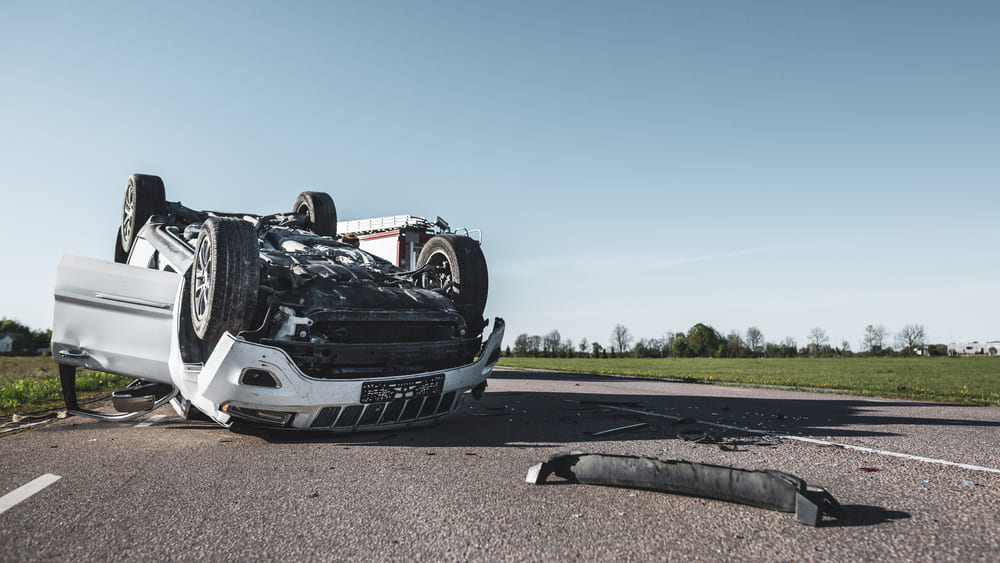
Rollover crashes can happen in the blink of an eye, but the effects can last a lifetime. They remain one of the most dangerous types of vehicle accidents, often resulting in catastrophic injuries and emotional trauma.
Understanding what is one of the main causes of vehicle rollovers? It is an important step in preventing serious injuries and fatalities on Portland’s roads. Rollover crashes are among the deadliest types of vehicle accidents, often resulting in long-term consequences for those involved. At Paulson Coletti, our experienced Portland car accident lawyer team is committed to keeping our community informed and supported. By understanding the real causes behind rollovers, drivers can be better prepared to avoid dangerous situations.
Injured in a Car Accident? We Can Help You Seek Compensation
A vehicle rollover happens when a car tips onto its side or completely flips over, usually due to a sudden disruption in balance. These events are typically violent and unexpected, giving the driver little time to react. Most rollovers stem from a shift in the vehicle’s center of gravity. That shift often occurs when a driver takes a sharp turn, drives too fast, or collides with an obstacle like a curb or soft roadside shoulder.
Here are a few real-world causes:
While rollovers are more common in single-vehicle accidents, multi-vehicle crashes can also lead to these dangerous outcomes.
Driver behavior is the leading contributor to rollover accidents. Everyday choices behind the wheel, like speeding, jerking the wheel too fast, or glancing at a phone, can drastically increase the chances of a rollover. These actions might not seem reckless, but the consequences can be severe when road conditions or vehicle dynamics come into play.
A sudden lane shift during a downpour or an overcorrection after veering onto gravel can throw a vehicle off balance. This is especially true for SUVs, pickups, or other tall vehicles with higher centers of gravity. Even cautious drivers are vulnerable when attention slips for a split second.
Speeding continues to be a significant issue across Oregon roadways. When a driver takes a corner too quickly or changes lanes abruptly at high speeds, the vehicle’s weight may shift violently, and that instability increases the risk of a rollover, especially in cars with tall profiles like trucks and SUVs.
The NHTSA warns that excessive speed limits a driver’s reaction time and control. Here are some actions you can take to stay safe:
These simple adjustments can keep you and others safer on the road.
When your focus leaves the road, even for a second, reaction time drops; that’s when rollover incidents can happen, especially if a sudden maneuver causes the car to jerk or veer.
According to the Oregon Department of Transportation, distractions fall into four categories:
Multitasking while driving doesn’t just increase your risk; it affects everyone around you.
In rural areas, road shoulders are often soft or sloped. When a vehicle drifts off the pavement, some drivers panic and yank the steering wheel to correct their path. This overcorrection can trigger a rollover, especially on narrow roads or loose gravel.
The better response is to slow down gradually and gently steer back on track. Rural driving requires calm, deliberate actions to keep the vehicle steady.
Contact Our Portland Car Accident Lawyer
Beyond driver behavior, some other elements can play a role in rollover incidents:
Even if a driver is cautious, these factors can make a situation dangerous. Staying alert to your surroundings and keeping up with vehicle maintenance is key.
Not all vehicles carry the same risk. Those with a high center of gravity and a narrow wheelbase roll more easily. This includes:
Manufacturers often include stability systems and rollover sensors, which are not foolproof. Drivers still need to account for their vehicle’s weight, height, and how it handles turns and sudden stops.
The severity of injuries in rollover accidents can be extreme due to the violent nature of the motion. Victims may be tossed around inside the vehicle or even ejected if not properly restrained. These crashes often result in:
Beyond physical wounds, psychological impacts like anxiety and PTSD are common. Long-term recovery can involve surgeries, therapy, and ongoing emotional support.
The steps taken after a crash are critical. They affect not only your physical health but also any potential legal action. Here’s a straightforward approach:
Seeking legal guidance early helps protect your rights and ensures no critical evidence is lost.
Recovering from a rollover accident takes more than just time. Between missed work, rising medical costs, and emotional challenges, it can feel like too much to handle alone. Oregon law allows injured victims to pursue compensation when someone else’s negligence caused the crash.
At Paulson Coletti, we advocate for Portland drivers every step of the way. Call us today at 503-226-6361 . We’ll stand beside you as you take the next steps toward recovery.

This page has been written, edited, and fact-checked by our team of legal writers in accordance with our editorial guidelines. It has been approved by partners Jane Paulson and John Coletti—respected trial attorneys with decades of experience representing personal injury victims.
Key Takeaways Electric vehicles are not inherently more dangerous and often receive strong crash safety ratings. Their design, including larger crumple zones and reinforced...
Key Takeaways Prioritize safety by checking for injuries and, if possible, moving vehicles out of traffic. Call 911 promptly to secure medical help and...
Key Takeaways Oregon law bans holding or using a phone while driving, even at a red light. A violation can occur with texting, browsing,...

 (503) 226-6361