
call today for your free evaluation
call today for your free evaluation
Posted on July 24, 2026 written by Jane Paulson
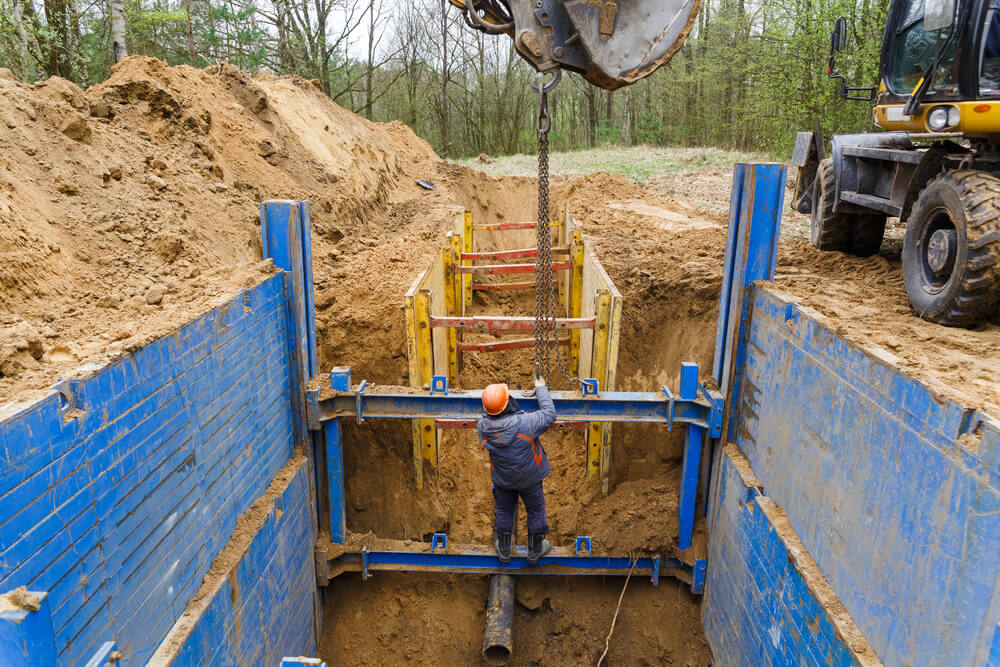
Construction sites across Portland, Oregon, carry serious risks, but few hazards are as sudden or as fatal as a trench collapse. The causes of trench accidents span a range of factors, from inadequate protective systems to unstable soil and ignored federal safety standards. Soil instability, absent or inadequate protective systems, and human error are the primary drivers of trench accidents. A single cubic yard of dirt can weigh more than 3,000 pounds, underscoring how quickly a collapse can become fatal. If you or someone you know has been seriously hurt, a Portland Trench Collapse Lawyer can help you understand your legal options.
At Paulson Coletti Trial Attorneys, we represent construction workers injured through the negligence of others and pursue accountability from every responsible party.
Contact Our Portland Construction Accident Lawyer
Trenching work requires excavating below grade, which removes the natural support structures that keep the surrounding soil stable. Once that stability is disrupted, the walls can shift and collapse with little to no warning. According to the CDC’s National Institute for Occupational Safety and Health, trench collapses are one of the most dangerous hazards in the construction industry, with fatality rates that consistently exceed those of other excavation-related incidents. The sheer weight of displaced soil leaves workers with virtually no means of escape once a collapse begins.
Federal safety standards require protective systems for most trenches that are 5 feet or more in depth. These systems include sloping the trench walls at a stable angle, shoring the walls with timber or hydraulic supports, or using a trench box to shield workers from a cave-in. When contractors skip these measures or install them incorrectly to save time and cost, they create conditions where a collapse becomes not just possible but likely.
The causes of trench accidents in many Oregon construction injury cases trace directly back to this failure. A missing trench box or improperly angled wall is not an oversight; it is a decision that puts workers in danger.
Not all soil behaves the same way, and the type of soil being excavated directly affects trench stability. Clay-heavy soil, saturated ground after Oregon’s frequent rain, and previously disturbed fill material all behave differently under pressure. Soil that appears firm at the surface may shift significantly at depth when heavy equipment or nearby foot traffic adds vibration.
When site supervisors fail to assess soil conditions before digging begins or to reassess after rainfall, the risk of collapse increases sharply. Proper soil classification is a required step under federal standards, and skipping it is recognized as a contributor to trench injuries.
The Occupational Safety and Health Administration sets binding requirements for excavation and trenching work under OSHA Standard 1926.652, which governs protective systems, soil classification, and access and egress requirements for all trench operations. Employers who skip required inspections, fail to provide safe entry and exit points, or allow workers into unprotected trenches are in direct violation of federal law.
In Oregon, these violations are relevant not only to regulatory enforcement but also to establishing negligence in a civil injury claim. When a worker is hurt because a contractor ignored OSHA requirements, that violation becomes significant evidence in determining who bears legal responsibility.
Even when a trench wall remains intact, workers still face additional hazards from surface activities. Heavy equipment operating too close to a trench edge transmits vibration through the ground, weakening the soil and increasing the risk of collapse. Tools, materials, and excavated soil piled too close to the trench lip can fall directly onto workers below.
Vehicles that cross near open trenches without proper bridging or barriers create sudden surcharge loads that destabilize walls. These hazards reflect a failure of site management as much as a failure of physical safeguards.
Injuries resulting from trench accidents are frequently catastrophic. Workers who survive a collapse may face crush injuries, broken bones, spinal cord damage, or traumatic brain injuries from impact with tools and equipment. Suffocation from soil displacement is a leading cause of trench fatalities.
Even partial burial places enormous compressive force on the chest and abdomen, restricting breathing within seconds. Recovery is often lengthy, expensive, and, in the most serious cases, permanently limiting.
Contact Our Portland Car Accident Lawyer
Oregon workers injured in trench accidents may have legal claims beyond a standard workers’ compensation filing. General contractors, subcontractors, site owners, and equipment manufacturers may each carry responsibility depending on the specific causes of trench accidents at the job site. When a contractor ignored required safety standards, when a property owner created dangerous excavation conditions, or when defective equipment contributed to the collapse, injured workers and their families may have grounds to pursue a personal injury or wrongful death claim.
Oregon law allows these claims to proceed alongside workers’ compensation, and the damages available in civil court, including compensation for pain, suffering, and long-term disability, go well beyond what workers’ compensation typically covers.
Trench injuries carry life-altering consequences, and the legal process that follows deserves the same serious attention. At Paulson Coletti Trial Attorneys, our team thoroughly investigates the causes of trench accidents, identifies all responsible parties, and pursues full accountability on behalf of injured workers and their families.
Call (503) 226-6361 to speak with a Portland Trench Collapse Lawyer and get answers about your options.
At Paulson Coletti, a local firm based in Oregon, justice is our mission. As experienced trial attorneys, we fight for injury victims across Oregon and Washington, holding negligent parties accountable. With a proven track record in and out of the courtroom, we are dedicated to securing fair compensation for our clients. We take a client-centered approach, focusing on cases we believe in and delivering results that matter. No fees unless we win-because justice should never come with financial risk.
Paulson Coletti
Trial Attorneys PC

This page has been written, edited, and fact-checked by our team of legal writers in accordance with our editorial guidelines. It has been approved by partners Jane Paulson and John Coletti—respected trial attorneys with decades of experience representing personal injury victims.
Forklifts play a critical role on Portland construction sites, but they are also a major source of serious workplace injuries. What are the main...
Suffering a workplace injury can leave you with medical bills, lost wages, and uncertainty about your future, but reporting the accident properly is the...
Exposure to high temperatures and direct sunlight puts construction workers at serious risk for heat exhaustion, heat stroke, and dehydration on the job. Your...

 (503) 226-6361